
Protected Geographical Indication
"Mugello Chestnut PGI"
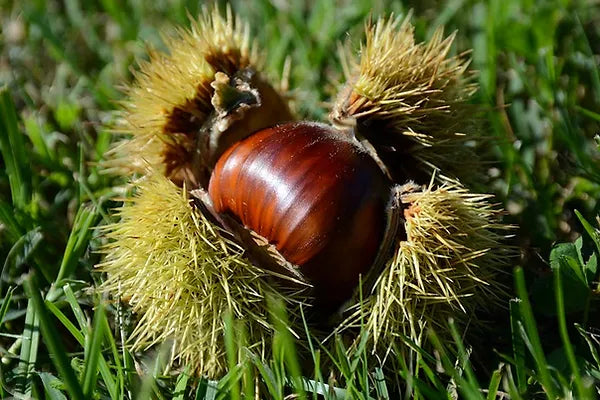
Since the first PGI identification act in 1996, the European Union has recognized the excellence of Mugello chestnuts, awarding them the prestigious Protected Geographical Indication label (attributed to those agricultural and food products for which a specific quality, reputation, or other characteristic depends on their geographical origin, and whose production, processing, and/or preparation take place in a specific geographical area).
To be PGI, chestnuts must have precise characteristics: a rather large and uniform size (no more than 90 fruits per kilo); they must be healthy – free from mold or wormholes – whole, dry, and clean. From the chestnut groves to the sales counter, a strict set of regulations governs the entire supply chain, which must meet precise requirements and undergo inspections.
care and attention
Collection and storage
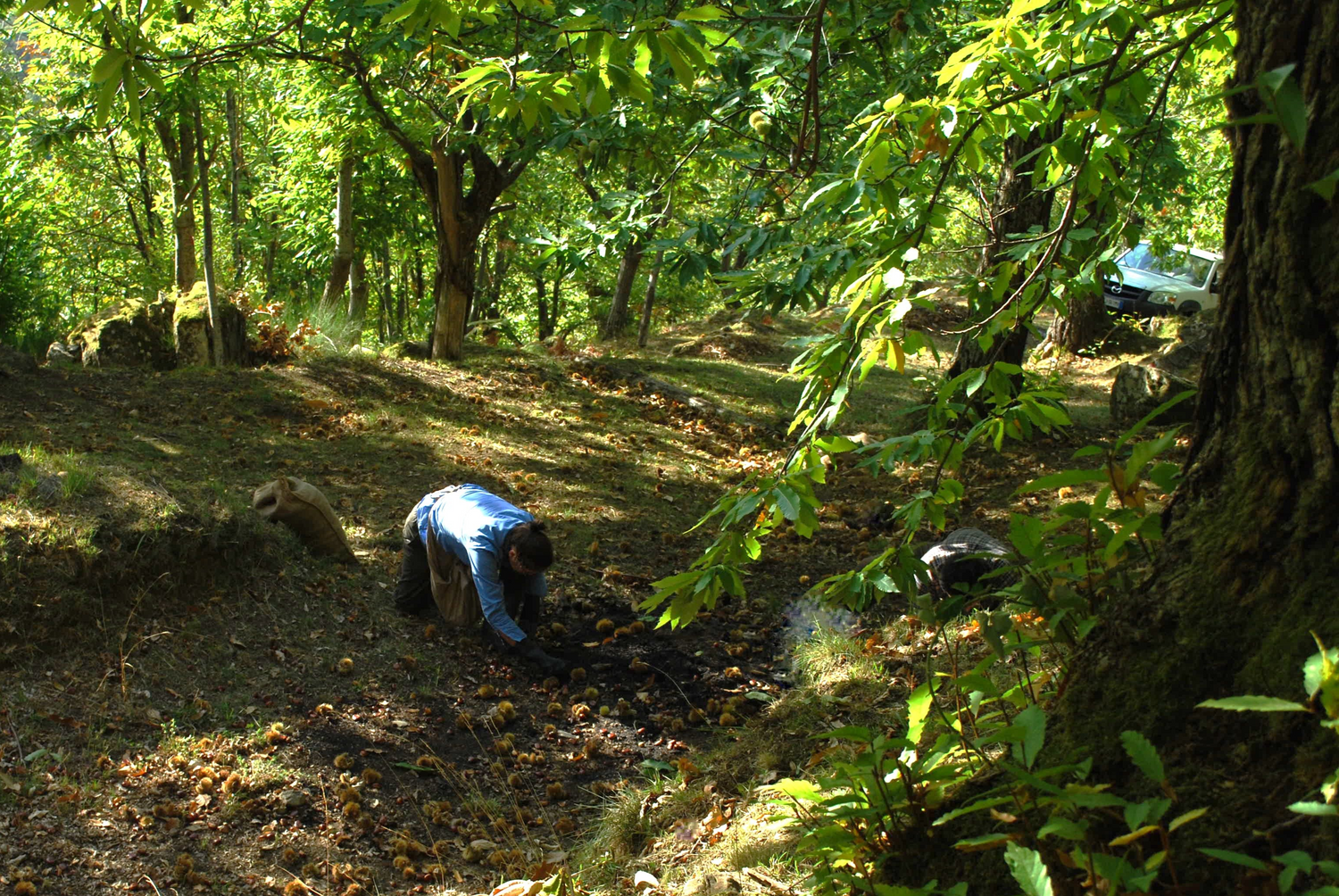
The marron chestnut is a fruit that requires care and attention, even after it has fallen. It must not remain on the ground for long, which is why it is necessary to pass repeatedly under the same trees for harvesting.
An initial selection takes place directly in the marroneta (chestnut grove); the fruits then undergo a scrupulous manual examination and screening, which sorts them by size. On the same evening they are harvested, they go to the distributor or are on the market just a few days after leaving the woods.
To preserve them for longer, the traditional technique used is curatura: the chestnuts are immersed in water at room temperature for 8 days and subsequently spread out on a porous surface and dried quickly by turning them often.
domesticated and gentle for a sweet and fragrant taste
Distinguishing features
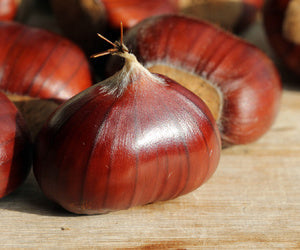
Some believe that a "marrone" is nothing more than a large chestnut; in reality, they are two fruits with different characteristics: the "marrone" comes from grafted plants, which make it "domesticated" and "refined."
Its size is generally larger, the color is lighter, tending towards reddish with darker streaks, the shape is oval and elongated, the hilum (the whitish part at the base of the fruit) is more rectangular, and the inner skin is thin and does not penetrate as deeply, making it easier and quicker to peel the cooked fruit.
The main distinction is the taste: sweeter and more fragrant, the "marrone" seems to have absorbed and enhanced in its flesh the most mysterious scents of the forest.

naturally gluten-free
High nutritional quality
From a nutritional standpoint as well, the chestnut is an element of high quality, thanks to its high percentage of starches combined with a decent content of fats, proteins, and mineral salts (especially sodium, potassium, iron, magnesium, calcium, and phosphorus).
In fact, chestnuts contain: 55.8% water, 2.9% protein, 1.7% lipids, 36.7% carbohydrates, 8.9% soluble sugars. They also contain vitamins, especially those of group B, but also C and PP.
Their richness in complex carbohydrates makes them similar in nutritional value to cereals, without containing gluten, which is why they are a valid alternative in case of intolerance and can completely cover the carbohydrate portion of a meal.
Chestnut grove and artisanal tradition
