
Difference between marrons and chestnuts: a complete guide
Share
If you've ever wondered whether you are buying "marroni" (marron chestnuts) or "castagne" (common chestnuts), you are in good company. The two terms are often used as synonyms, but there are substantial differences between a marrone and a chestnut regarding botany, flavor, quality, and even economic value. Let's discover them together.
Chestnut and Marrone: the same plant, different fruits
Both chestnuts and marroni come from the same tree: the European chestnut (Castanea sativa). The difference is not a botanical species, but a cultivated variety and how the fruit develops within the burr.
In short: the marrone is a high-quality variety of chestnut, carefully cultivated, sweeter, and with fewer tannins than the common chestnut.
The 5 main differences between marrone and chestnut
1. Size and shape
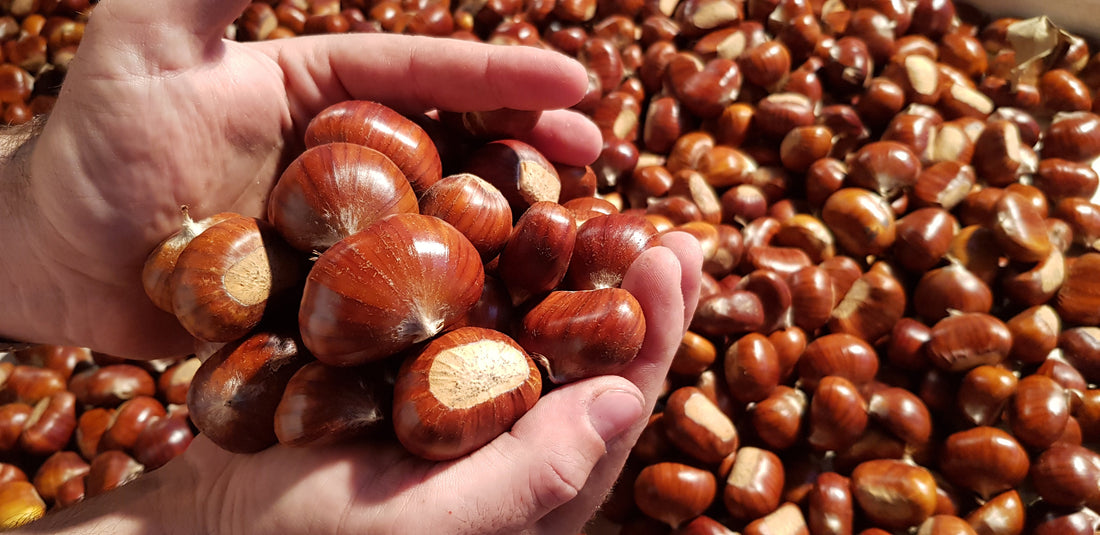
Marroni are significantly larger than chestnuts: a high-quality marrone easily exceeds 10-12 grams, while a wild chestnut rarely exceeds 5-7 grams. The shape of the marrone is spherical and regular; that of the chestnut is more irregular and flat on one side.
2. Yield and skin separation
One of the criteria that distinguishes the marrone from the chestnut in the market is the ease with which the inner skin (the episperm) separates. In high-quality marroni, the skin peels off easily during cooking without penetrating the flesh. In wild chestnuts, however, the skin tends to get into the folds of the fruit, making peeling more difficult and reducing the yield.
3. Taste and composition
The marrone has a sweeter, less astringent, and richer flavor than the wild chestnut. This is because it contains fewer tannins and a higher amount of natural sugars. It is this sweetness that makes it ideal for elaborate preparations such as marrons glacés, creams, fine flours, and pastry desserts.
4. Cultivation and terroir
Wild chestnuts grow spontaneously in the woods. Marroni, on the other hand, come from selected plants cared for over centuries, often linked to a specific territory with unrepeatable soil and climate characteristics. The link to the territory is so profound that many varieties of marrone have obtained European recognition such as the PGI (IGP).
5. Commercial value
For the same weight, marroni are always worth more than wild chestnuts. The market recognizes their superior quality: greater sweetness, better yield, and a regular shape ideal for processing. It is no coincidence that all luxury preparations — from marrons glacés to high-end pastry creams — are made exclusively with marroni.
The Mugello Marrone PGI: Italian excellence
Among all the varieties of marrone grown in Italy, the Mugello Marrone PGI holds a place of absolute privilege. Certified by the European Union with the Protected Geographical Indication, it comes from the hilly woods of the Tuscan Mugello — one of the most vocated chestnut-growing areas in Europe — and complies with strict regulations that guarantee its origin, variety, and harvesting methods.
The characteristics that make it unique:
- High caliber and regular spherical shape
- Skin that separates perfectly from the flesh
- White, compact flesh with a sweet and enveloping flavor with notes of honey
- Strictly hand-harvested in late autumn
- Certified organic production, without chemical treatments
We at La Fenice work exclusively with the Mugello Marrone PGI, harvested in the woods surrounding Vicchio del Mugello. Every product we bring to the table — from flour to marrons glacés, from cream to pasta — starts with this extraordinary fruit.
Nutritional values and benefits: marroni and chestnuts compared
From a nutritional point of view, marroni and chestnuts are very similar: both are rich in complex carbohydrates and fiber, low in fat, and naturally gluten-free. The differences lie mainly in the sweetness and texture, not in the basic values.
- Fiber: promotes good digestion and a prolonged feeling of satiety.
- Slow-release energy: complex carbohydrates make marroni and chestnuts a suitable food for those who exercise or are looking for an alternative to grains.
- Vitamins and minerals: they contain B-group vitamins, vitamin C, potassium, and magnesium.
- Gluten-free: chestnut and marrone flour is an excellent base for those who need to avoid gluten.
How to recognize a true marrone at the time of purchase
If you are looking for quality marroni, here is what to check:
- Shape: it must be rounded and regular, without obvious flattening
- Size: caliber greater than 10 mm
- Brightness: the skin must be shiny and of a uniform dark chestnut color
- Certification: look for the PGI label and verify the production territory
- Origin: prefer direct producers who manage the entire supply chain
Marroni or chestnuts in the kitchen: when to use one or the other
For quality preparations — marrons glacés, creams, fine flours, fresh pasta — always use selected varieties of marroni, preferably PGI. The natural sweetness and purity of the flesh make a difference in the final result.
For soups, roasted chestnuts, and rustic preparations where aesthetic quality is less relevant, wild chestnuts can be an acceptable budget-friendly choice. But if you want the best, there are no compromises.
Do you want to discover what can be done with the Mugello Marrone PGI? Explore our full line: marrone flour, creams, marrons glacés, cookies, and artisanal pasta.
Discover our Mugello Marrone PGI Flour and all La Fenice products at marronilafenice.com.
Frequently asked questions about marroni and chestnuts
Are marroni and chestnuts the same thing?
No. They come from the same tree, the European chestnut, but the marrone is a selected variety: larger, sweeter, with a skin that peels off easily and usually only one fruit per burr.
How do you recognize a marrone from a chestnut?
The marrone has a rounded and regular shape, light skin with obvious dark streaks, and a small hilum (the scar at the base). The chestnut is smaller, often flattened on one side, and more difficult to peel.
What does Mugello Marrone PGI mean?
It is a marrone certified by the European Union with Protected Geographical Indication: it guarantees origin from the Mugello region, variety, and harvesting methods. Learn more in our guide to the Mugello Marrone PGI.
Are marroni or chestnuts better for roasting?
Marroni make for sweeter and easier-to-peel roasted chestnuts. You can find timing and tips in our guide on how to cook marroni.



