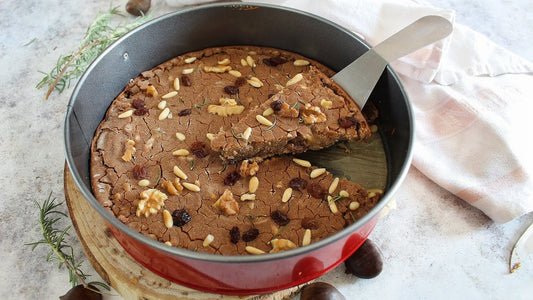
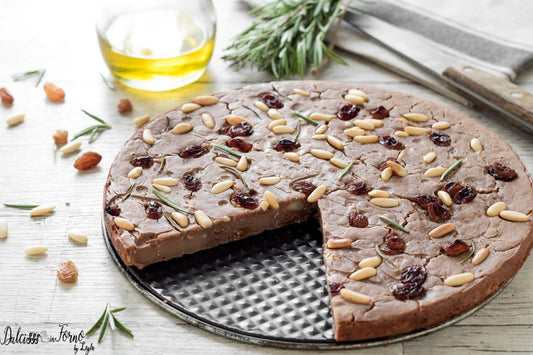
Tuscan Castagnaccio: Grandma's original recipe
Share
Castagnaccio is the iconic dessert of the Tuscan peasant tradition: a few simple ingredients — chestnut flour, water, oil, pine nuts, raisins, and rosemary — for a rustic, fragrant, and naturally gluten-free result. In this guide, you will find grandma's original step-by-step recipe, regional variations, and tricks for a perfect texture.
🔥 220 kcal per serving · 🎯 Difficulty: easy · ⏱️ Preparation: 15 min · 🍳 Cooking: 30-40 min · 💰 Cost: low
Lactose-free, gluten-free
Ingredients for the original castagnaccio (24 cm pan, 8 servings)
- 350 g of Mugello PGI chestnut flour
- 500 ml of water
- 50 g of pine nuts
- 50 g of raisins
- 3 tablespoons of extra virgin olive oil
- 1 sprig of rosemary
- 1 pinch of salt
How to make castagnaccio: the procedure
- Sift the chestnut flour into a large bowl to remove lumps, then add the pinch of salt.
- Add the water in a thin stream, whisking until you obtain a smooth and rather fluid batter.
- Incorporate raisins and pine nuts: add the raisins (soaked in warm water and squeezed dry) and half of the pine nuts, keeping the rest for the top.
- Pour the mixture into a pan greased with a tablespoon of oil and level it out with a spatula: the ideal thickness is about 1–1.5 cm.
- Decorate with the remaining pine nuts, rosemary needles, and a drizzle of raw olive oil.
- Bake in a preheated static oven at 180°C for 30-40 minutes, until the surface is golden and cracked and the edges are slightly crispy. Let cool before cutting.
Tips for a perfect castagnaccio
- The flour makes the difference: chestnut flour ground on natural stone is sweeter and more fragrant, making the castagnaccio less bitter. Discover why in our guide to La Ferté stone-ground chestnut flour.
- Softer or crunchier: for a softer castagnaccio, slightly increase the water; for a thin and crispy version, use a larger pan.
- No sugar: the original recipe does not call for it; the sweetness comes from the flour and raisins.
Variations of castagnaccio
- Castagnaccio with walnuts: add coarsely chopped walnuts to the batter for a pleasant crunch.
- Ligurian castagnaccio: thinner, with fennel seeds.
- Pistoia castagnaccio: with walnuts and grated orange zest for a citrus note.
- Castagnaccio with milk: a creamier version; find the recipe for castagnaccio with milk.
How to serve castagnaccio
- With fresh ricotta: it balances the richness of the dessert with its lightness.
- With a drizzle of honey: organic chestnut honey enhances its taste.
- With Vin Santo: the quintessential Tuscan pairing.
Why chestnut flour is healthy
Chestnut flour is naturally gluten-free, rich in fiber, complex carbohydrates, B vitamins, and minerals like potassium and magnesium. For other ideas using this flour, read our 5 recipes with chestnut flour.
Frequently asked questions about castagnaccio
How long does castagnaccio keep?
At room temperature, covered, for 2-3 days. In the refrigerator for up to 4-5 days: bring it back to room temperature before serving.
Is castagnaccio suitable for celiacs?
The ingredients are naturally gluten-free; for celiacs, it is important to use certified gluten-free chestnut flour to avoid contamination.
Bring the taste of Tuscany home: discover our Mugello chestnut flour.